📺 Kamen Rider (1971)
Part of Super Hero Wars
The 1971 television series 'Kamen Rider' is the first live-action adaptation of Shotaro Ishinomori's manga, which was serialized simultaneously in Weekly Shōnen Magazine. Airing from April 3, 1971, to February 10, 1973, on Mainichi Broadcasting System and NET (now TV Asahi), the show introduced audiences to Takeshi Hongo, a young scientist turned into a grasshopper-themed cyborg by the evil organization Shocker. With his transformation belt, motorcycle Cyclone, and signature Rider Kick, Hongo became Japan's original masked superhero on two wheels. The series consisted of 98 episodes and was produced by Toei Company, with Ishinomori himself heavily involved in the creative direction.
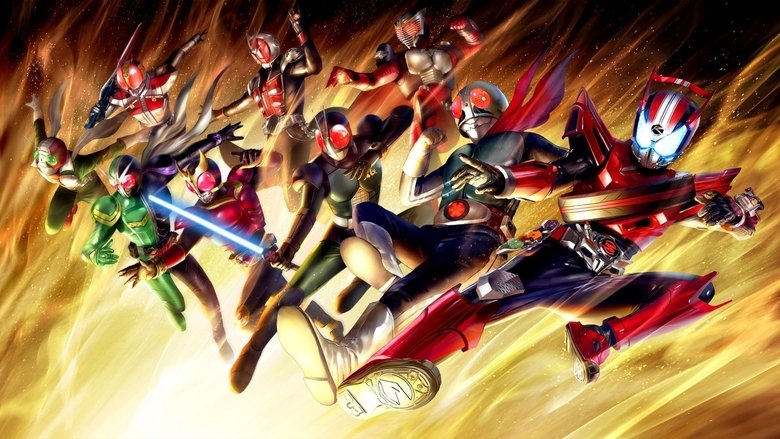
While the TV series was more family-oriented than the manga, it preserved the core conflict and introduced many elements that would define the franchise: the transformation catchphrase 'Henshin!', the dramatic pose, the monster-of-the-week format, and the hero's tragic origin. The iconic costume—especially the red compound eyes and the insect-like mouthplate—was a departure from earlier Japanese heroes and set a new visual standard. The show also introduced a second Kamen Rider, Hayato Ichimonji (Kamen Rider 2), after actor Hiroshi Fujioka, who played Hongo, was injured, allowing the series to continue with a new lead briefly.
'Kamen Rider' was a massive hit, sparking the 'Second Kaiju Boom' (or 'Henshin Boom') on Japanese television and influencing countless superhero shows in Japan and abroad. Its success led to continuous sequels, reimaginings, and an enduring media franchise spanning television, films, manga, and video games. The 1971 series remains a nostalgic touchstone in Japanese pop culture and is credited with establishing the tokusatsu superhero genre as a prime-time staple.

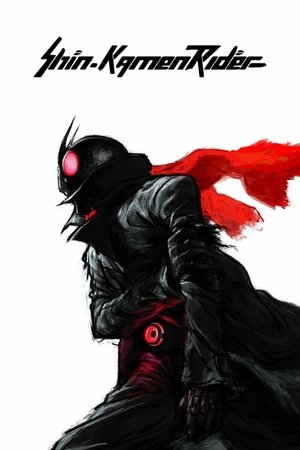
Kamen Rider is a Japanese science fiction manga series created by the legendary manga artist Shotaro Ishinomori. It was first serialized in 1971 in Weekly Shōnen Magazine, published by Kodansha, running concurrently with the groundbreaking live-action television series of the same name. The manga followed the story of Takeshi Hongo, a bright college student kidnapped and forcibly transformed into a cyborg by the evil secret society known as Shocker. Rather than becoming their pawn, Hongo breaks free and uses his new insect-themed powers and his enhanced motorcycle, the Cyclone, to wage a one-man war against Shocker's world-conquering schemes.
The Kamen Rider manga was notable for its darker and more violent tone compared to the TV adaptation, reflecting Ishinomori's signature blend of human drama and science fiction. The hero's iconic design—a grasshopper-inspired helmet with large compound eyes, a sleek suit, and a transformation belt—was established in the manga and became a template for countless successors. The series established the core formula of a lone, motorcycle-riding superhero battling a monstrous organization, each week facing a new monstrous kaijin (怪人).
Shotaro Ishinomori was already a celebrated figure in Japanese comics, known for Cyborg 009 and later for creating the Super Sentai series (adapted into Power Rangers). Kamen Rider solidified his reputation as a master of tokusatsu-influenced storytelling. The manga's success helped launch the Henshin Boom of the early 1970s, a wave of transformation-hero stories that dominated Japanese children's media. It remains a cornerstone of the tokusatsu and manga crossover phenomenon, beloved by generations of fans.
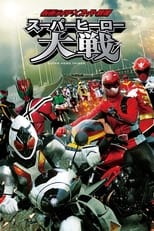
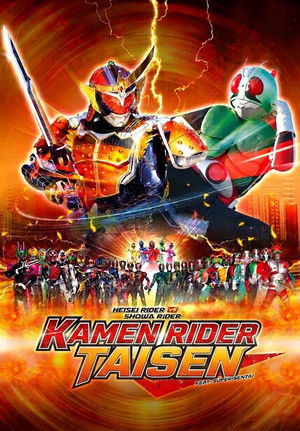
The *Super Hero Wars* series is a crossover film series produced by Toei Company, bringing together the iconic tokusatsu franchises of *Kamen Rider* and *Super Sentai*. Launched in the early 2010s, the series serves as a cinematic celebration of these long-running superhero properties, uniting heroes who traditionally existed in separate narrative worlds. The films are known for their high-energy action, elaborate team-ups, and the exploration of how the solitary, often tragic Riders interact with the vibrant, team-based Sentai squads. Each installment typically raises the stakes with world-ending threats, forcing these distinct champions to overcome their differences and fight together.
The series evolved beyond simple crossovers, delving into complex, reality-bending plots that revisit and sometimes rewrite the lore of both franchises. Early entries established the volatile chemistry between the two groups, while later films introduced internal conflicts, such as a generational civil war between Showa-era and Heisei-era Riders. The scope expanded further with the inclusion of other Toei superhero properties, notably the *Space Sheriff* series, transforming the conflict into a broader celebration of the company's tokusatsu legacy. This narrative ambition allows the films to function as self-aware commentaries on the evolution of Japanese superhero storytelling.
Culturally, the *Super Hero Wars* series became a staple of Japanese cinema, often released during holiday periods to attract a wide family audience. The films balance dazzling spectacle for younger viewers with deep-cut references and returning characters for long-time fans. Bold narrative swings, such as alternate-history plots that erase classic heroes from existence, demonstrate a willingness to experiment with the established mythos. By consistently blurring the lines between distinct universes, the series reinforces a timeless message about the power of collective strength and the idea that no hero can save the world alone.