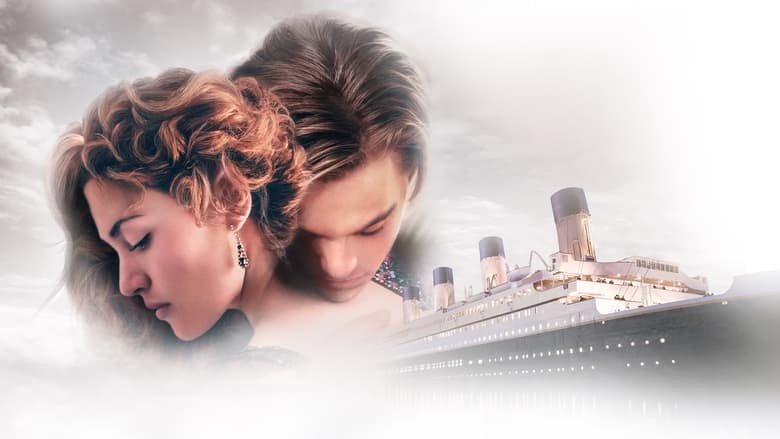
🎬 Titanic (1997)
Based on true story
James Cameron's Titanic is a monumental 1997 epic that masterfully blends historical catastrophe with a sweeping fictional romance. The film is anchored by the real-life sinking of the RMS Titanic in 1912, and Cameron went to extraordinary lengths to achieve historical authenticity, including diving to the actual wreck site multiple times and constructing a nearly full-scale replica of the ship at Baja Studios. The central love story between the free-spirited artist Jack Dawson and the constrained socialite Rose DeWitt Bukater serves as an emotional conduit, allowing audiences to experience the human dimension of the tragedy across the rigid class divides of Edwardian society.
Cameron's fascination with shipwrecks was the initial spark, but he realized a purely documentary approach would not capture the profound emotional weight of the event. By framing the disaster through a fictional romance, he created a deeply personal lens through which to view the historical horror. The production itself became legendary for its scale and difficulty, with a budget that ballooned to a then-unprecedented $200 million, making it the most expensive film ever made at the time. The film's release was met with intense media scrutiny predicting a catastrophic flop, but it instead became a cultural phenomenon, shattering box office records and becoming the highest-grossing film in history, a title it held for over a decade.
The film's impact extended far beyond its financial success. It won eleven Academy Awards, including Best Picture and Best Director, tying the record set by Ben-Hur. Celine Dion's power ballad My Heart Will Go On became an inescapable global hit, and the film's iconic moments—Jack and Rose at the bow, the handprint on the steamy car window—were instantly etched into pop culture. Titanic not only reignited a global fascination with the 1912 disaster but also set a new benchmark for large-scale, effects-driven filmmaking that seamlessly integrated cutting-edge CGI with practical sets and deeply felt human drama.

The sinking of the RMS Titanic was a catastrophic maritime disaster that occurred on April 15, 1912, during the ship's maiden voyage from Southampton, England, to New York City. The RMS Titanic, operated by the White Star Line and billed as the largest and most luxurious passenger liner of its time, struck an iceberg in the North Atlantic Ocean around 11:40 PM on April 14 and sank approximately two hours and forty minutes later, resulting in the deaths of over 1,500 of the roughly 2,224 passengers and crew aboard. The disaster exposed critical flaws in maritime safety practices, including insufficient lifeboats, inadequate wireless communication protocols, and overconfidence in the ship's 'unsinkable' design.
Captained by Edward Smith and constructed by Harland and Wolff in Belfast, the Titanic represented the pinnacle of early 20th-century engineering, featuring opulent first-class accommodations, advanced technology like a Marconi wireless system, and a grand staircase. The iceberg collision caused a series of hull breaches along the starboard side, flooding multiple watertight compartments and overwhelming the ship's design limits. Survivor accounts, official inquiries by the United States Senate and British Board of Trade, and subsequent investigations revealed heroic acts amid chaos, stark class disparities in survival rates, and pivotal roles by figures like the 'unsinkable' Molly Brown and bandleader Wallace Hartley, who played on as the ship went down.
The event reshaped global maritime regulations, leading to the International Ice Patrol, mandatory 24-hour radio watches, and the International Convention for the Safety of Life at Sea (SOLAS). Its enduring legacy as a symbol of human hubris, technological overreach, and tragedy has inspired countless narratives, making it one of the most scrutinized disasters in modern history.