
🎬 Dolores Claiborne (1995)
Based on novel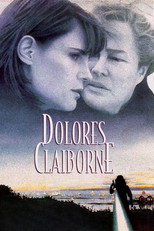
Stephen King's 1992 novel Dolores Claiborne was a bold experiment — a 300-page monologue without chapter breaks, told entirely in the voice of a sharp-tongued Maine housekeeper accused of murder. When Taylor Hackford adapted it for the screen in 1995, he faced the challenge of translating that singular voice into a visual medium. The solution, crafted by screenwriter Tony Gilroy, was to restructure the story around the strained relationship between Dolores and her estranged daughter Selena, using flashbacks to the pivotal solar eclipse day to gradually reveal the dark secrets of their shared past.
The film reunited Kathy Bates with the world of Stephen King five years after her Oscar-winning turn in Misery, and she has often said that Dolores Claiborne is her favorite performance. As the weathered, unbreakable Dolores, Bates sheds all vanity and delivers a performance of raw, working-class grit. Jennifer Jason Leigh plays the adult Selena as a brittle, pill-popping New York journalist who returns to the remote Maine island where she grew up, forced to confront memories she has spent years trying to suppress. The supporting cast is quietly stellar: Christopher Plummer as the dogged detective still nursing a decades-old grudge, David Strathairn as the charming but monstrous Joe St. George, and Judy Parfitt as the imperious Vera Donovan, whose acid-tongued relationship with Dolores provides some of the film's most memorable moments.
Shot on location in Nova Scotia, the film captures the harsh, windswept beauty of coastal New England, and the muted color palette — all grays, blues, and washed-out browns — reinforces the emotional austerity of the story. Hackford made the interesting choice to film the present-day scenes in color and the flashbacks in a desaturated, almost monochromatic look, visually distinguishing the two timelines while suggesting that the past has drained the life out of the present. The film was a sleeper hit, earning $46 million worldwide on a modest $13 million budget with little promotional push from Columbia Pictures.
Critics responded warmly, with particular praise for the two lead performances. Roger Ebert noted the film's unusual structure and emotional depth, and in the years since its release, Dolores Claiborne has steadily grown in reputation. In 2014, Time magazine ranked it among the top ten greatest Stephen King film adaptations — a list that includes The Shining, Carrie, and The Shawshank Redemption. The story's afterlife has been unusual: in 2013, it was adapted into a two-act opera by composer Tobias Picker, which premiered at the San Francisco Opera, proving that Dolores's voice — whether on the page, on screen, or on stage — continues to resonate.
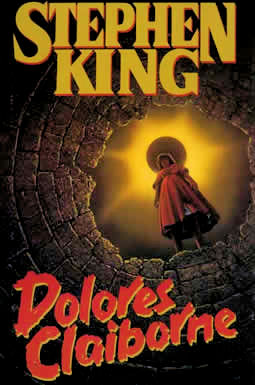
Dolores Claiborne is a psychological thriller novel by Stephen King, published in 1992. It marked a stylistic departure for King, as the entire story is told through a single, uninterrupted monologue — the transcript of a police statement given by the title character. There are no chapter breaks, creating an immersive, stream-of-consciousness narrative that draws the reader deeply into Dolores's voice and perspective.
The novel introduces the fictional community of Little Tall Island, Maine, a setting King would revisit in later works. It follows Dolores, a 65-year-old widow and longtime housekeeper, who is being questioned about the suspicious death of her wealthy employer, Vera Donovan. In the course of her statement, she confesses not to Vera's murder, but to the killing of her abusive husband, Joe St. George, nearly three decades earlier, during a solar eclipse.
At its core, the book is a story about the complex, often fraught bonds between women — particularly mothers and daughters, and employers and servants. It explores themes of domestic abuse, class resentment, and the quiet, desperate acts of survival that define a life. The relationship between Dolores and Vera evolves from one of servitude into a strange, prickly alliance, and their shared secret becomes the novel's dark, beating heart.
Dolores Claiborne was the best-selling novel of 1992 in the United States and received strong critical praise for its experimental narrative structure and its deeply realized protagonist. It is often cited alongside Gerald's Game, published the same year, as part of a pair of novels King wrote about women confronting trauma and patriarchal violence.