🎬 Stand by Me (1986)
Based on novel
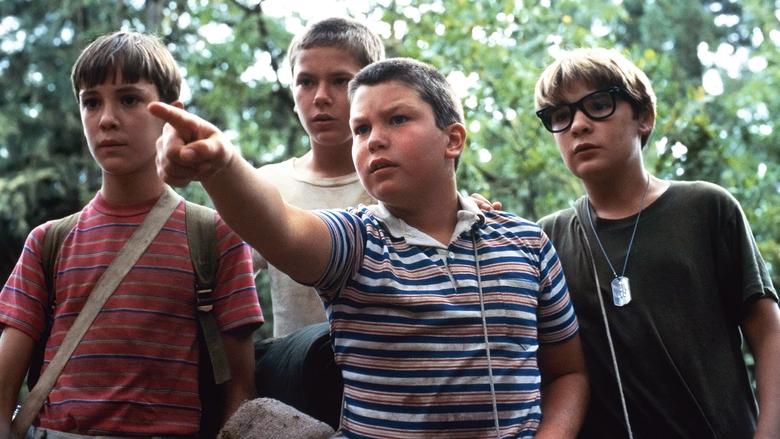
Rob Reiner’s "Stand by Me" is a masterclass in adaptation, transforming Stephen King’s semi-autobiographical novella "The Body" into a timeless cinematic touchstone. While King’s original story is a darker, more sprawling meditation on mortality and the end of innocence, Reiner and screenwriters Bruce A. Evans and Raynold Gideon distilled the narrative into a tightly focused coming-of-age tale. The core structure remains intact: four boys from the fictional town of Castle Rock, Oregon, embark on an overnight hike to find the corpse of a missing boy, hoping to become local heroes. However, the film softens some of the novella’s harsher edges, particularly in its framing device. The adult Gordon’s reflections are less cynical, and the film’s most significant structural change is the removal of several violent, tangential stories-within-the-story that King’s older Gordie recounts, keeping the focus squarely on the boys’ journey and their evolving friendship.
The casting proved to be one of the film’s greatest strengths, with the young ensemble—Wil Wheaton, River Phoenix, Corey Feldman, and Jerry O’Connell—delivering remarkably authentic performances under Reiner’s sensitive direction. The film’s title itself is a notable departure from the source material; it was changed to "Stand by Me" for marketing reasons, as the studio feared "The Body" would be mistaken for a horror film or a sex comedy. The new title, taken from the Ben E. King classic, perfectly encapsulates the movie’s emotional core of loyalty and companionship. The soundtrack, packed with period-appropriate hits, is another element entirely invented for the film, using music to evoke a powerful sense of 1950s nostalgia that is less pronounced in King’s text.
Upon its release in 1986, "Stand by Me" was both a critical and commercial success, earning an Academy Award nomination for Best Adapted Screenplay. Critics praised its honest portrayal of pre-adolescent friendship, and it has since been recognized as a defining film of its era. The movie launched or boosted the careers of its young stars, with River Phoenix’s performance as the tough-but-sensitive Chris Chambers being particularly lauded as heartbreaking and wise beyond his years. The film’s legacy has only grown, with Rolling Stone calling it "a staple of youthful nostalgia" that improves with age, a sentiment echoed by its enduring popularity and a theatrical re-release planned for its 40th anniversary in 2026.
Ultimately, "Stand by Me" succeeds not by being a literal translation of "The Body," but by capturing its soul. It trades some of King’s narrative complexity and bleakness for a warmer, more universally resonant meditation on friendship and the inevitable loss of childhood. The film’s famous closing line, spoken by the adult Gordie, is a direct lift from the novella but gains new weight in the context of the film: "I never had any friends later on like the ones I had when I was twelve. Jesus, does anyone?" This perfect synthesis of King’s words and Reiner’s vision cemented the film as a rare adaptation that stands proudly on its own, a beloved classic that feels both deeply personal and profoundly universal.
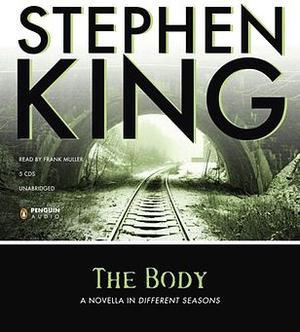
The Body is a mystery thriller novel published in 1983 by American author Richard Ben Sapir, who was best known as the co-creator of the long-running Destroyer action-adventure series. The novel marked a departure from Sapir's pulp series work, presenting a standalone religious conspiracy thriller that blends archaeology, faith, and international intrigue.
The story begins when a female archaeologist working in Jerusalem uncovers an ancient skeleton bearing the marks of crucifixion, accompanied by an Aramaic inscription reading "King of the Jews." The discovery sends shockwaves through the religious and political establishment, prompting the Israeli government to invite Vatican investigators to determine whether the remains could be those of Jesus Christ. A former soldier turned Catholic priest is dispatched to work alongside the reluctant archaeologist, and the pair soon find themselves entangled in a web of danger involving the Vatican, the Mossad, the KGB, the Mafia, and the United States government.
The Body was praised for its high-concept premise and its ability to sustain tension while exploring weighty theological questions. Sapir, who was Jewish, approached the material with a perspective that examined the intersection of faith and empirical evidence, creating a thriller that questioned what would happen to Christianity if its foundational miracle were scientifically disproven. The novel's blend of archaeological mystery, religious controversy, and Cold War espionage made it a distinctive entry in the thriller genre of the early 1980s.