
🎬 All That Jazz (1979)
Based on true story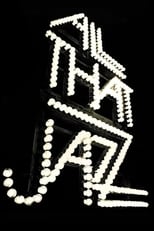
All That Jazz (1979) is Bob Fosse's semi-autobiographical masterpiece, a dazzling and brutally honest musical drama that uses the framework of a dying man's life flashing before his eyes to examine the cost of artistic obsession. The film stars Roy Scheider as Joe Gideon, a brilliant but self-destructive dancer-choreographer-director who is clearly Fosse's alter ego, as he tries to edit a film about a stand-up comedian while simultaneously mounting a Broadway musical about a murderess. The film takes its title from the show-stopping song from the very musical Fosse was staging during this period: Chicago.
Rather than a literal retelling of events, Fosse and co-writer Robert Alan Aurthur transformed real life into a fantastical, expressionistic fever dream. The character of Angelique (played by Jessica Lange), a seductive figure in white who represents Death, has no real-world counterpart but serves as a powerful metaphor for Fosse's lifelong flirtation with mortality. The film's famous opening audition sequence, the "Take Off with Us" number, and the climactic "Bye Bye Life" production number are pure cinematic invention, even as they channel Fosse's real anxieties and ambitions.
Key real-life figures are thinly disguised: Ann Reinking plays Katie Jagger, a dancer and lover clearly based on Reinking herself (who was Fosse's partner at the time), while Leland Palmer plays Audrey Paris, an ex-wife character based on Fosse's first wife, dancer Joan McCracken. Cliff Gorman plays Davis Newman, a stand-up comedian based on Lenny Bruce, whom Gorman had played on stage. The film's most harrowing sequence, Gideon's open-heart surgery, mirrors Fosse's own real-life heart attack and subsequent bypass surgery in 1974.
All That Jazz premiered at the 1980 Cannes Film Festival, where it shared the Palme d'Or with Akira Kurosawa's Kagemusha. It received nine Academy Award nominations, winning four, and was later selected for preservation in the National Film Registry. Stanley Kubrick called it the best film he had ever seen. More than four decades later, it remains one of the most audacious, personal, and unflinchingly honest portraits of an artist ever committed to film, a work that turns self-indulgence into art and mortality into a show-stopping musical number.

Bob Fosse was one of the most influential American dancers, choreographers, and directors of the 20th century, known for his distinctive, jazz-influenced style characterized by turned-in knees, rolled shoulders, and the use of hats, gloves, and canes. Born in Chicago in 1927, Fosse began performing in vaudeville as a child and rose to become a Broadway legend, choreographing and directing iconic musicals including The Pajama Game, Damn Yankees, Sweet Charity, Pippin, and Chicago.
Fosse's career was marked by extraordinary success and personal turmoil. He won an unprecedented eight Tony Awards for his choreography, an Academy Award for directing Cabaret (1972), and an Emmy for directing the concert film Liza with a Z. His work was intensely personal and often autobiographical, exploring themes of obsession, mortality, artistic ambition, and the dark underbelly of show business. His perfectionism, womanizing, and struggles with heart disease and substance abuse were well-documented, and he often blurred the line between his art and his life in ways that were both brilliant and self-destructive.
The period that directly inspired All That Jazz was particularly chaotic: Fosse was simultaneously editing his film Lenny (about comedian Lenny Bruce) while rehearsing and staging the original 1975 Broadway production of Chicago, a musical about murder, celebrity, and corruption in the justice system. This grueling dual workload, combined with his failing health and complex personal relationships, became the raw material for what would be his most personal and unflinching work.