🎬 A Tale of Two Cities (1935)
Based on novel
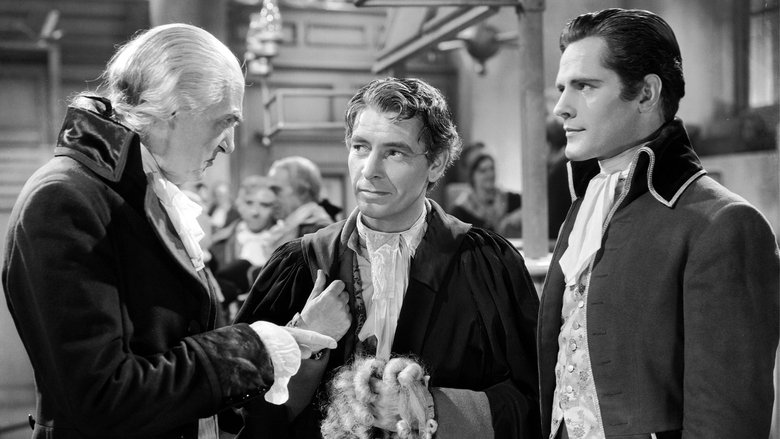
Charles Dickens's 1859 masterpiece A Tale of Two Cities has been adapted for the screen numerous times, but the 1935 MGM production remains one of the most celebrated. Produced by David O. Selznick, who would later bring another Dickens classic to life with David Copperfield, this version was directed by Jack Conway and features a screenplay by W. P. Lipscomb and S. N. Behrman. The film was a prestige project for the studio, arriving during Hollywood's golden age of literary adaptations, and it earned Academy Award nominations for Best Picture and Best Film Editing.
The casting was a major strength. Ronald Colman delivers a career-defining performance as Sydney Carton, capturing both the character's cynical dissipation and his profound, quiet heroism. Elizabeth Allan plays the gentle Lucie Manette, while a remarkable supporting cast fills out revolutionary France: Basil Rathbone is chillingly aristocratic as the Marquis St. Evrémonde, Blanche Yurka seethes with righteous fury as Madame Defarge, and Edna May Oliver provides some rare comic relief as the loyal Miss Pross. The film condenses Dickens's sprawling narrative into just over two hours, focusing tightly on the love triangle between Carton, Lucie, and Charles Darnay, and the escalating chaos of the Terror.
While necessarily streamlining the novel's intricate plot, the 1935 adaptation is praised for its atmospheric black-and-white cinematography and its dramatic set pieces, particularly the storming of the Bastille and the film's emotional climax. The final scenes, culminating in Carton's famous line "It is a far, far better thing that I do, than I have ever done," are rendered with a sincerity and power that still resonate with audiences. This version set a high bar for subsequent adaptations, including the 1958 British version starring Dirk Bogarde and the 1980 television film with Chris Sarandon, but many still regard the 1935 film as the definitive cinematic telling of Dickens's immortal story of love and sacrifice.
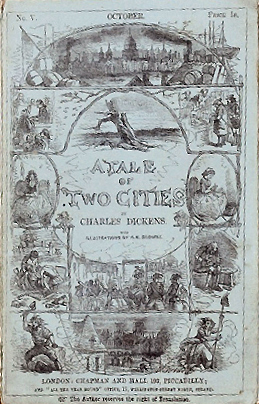
A Tale of Two Cities is a historical novel by Charles Dickens, first published in weekly installments in the literary periodical All the Year Round from April to November 1859, and subsequently in book form that same year. Set against the tumultuous backdrop of the French Revolution, the novel contrasts the social and political turmoil of Paris with the relative stability of London. The story follows French doctor Alexandre Manette, his release after eighteen years of unjust imprisonment in the Bastille, and his reunion with his daughter Lucie in England. Their lives become entangled with Charles Darnay, a French aristocrat who has renounced his family's cruel legacy, and Sydney Carton, a dissolute English barrister who ultimately finds redemption through an act of supreme self-sacrifice.
The novel is renowned for its exploration of themes such as resurrection, sacrifice, injustice, and the cyclical nature of violence. Its famous opening lines—"It was the best of times, it was the worst of times..."—are among the most recognized in English literature. Dickens drew heavily on Thomas Carlyle's The French Revolution for historical detail, crafting a narrative that is both a gripping personal drama and a sweeping social commentary.
A Tale of Two Cities is considered one of Dickens's most serious and tightly plotted works, departing from the serialized humor of many of his earlier novels. It has achieved enduring popularity and is frequently cited as one of the best-selling novels of all time. The novel's powerful conclusion, with Carton's final vision of a better world, remains one of the most moving and iconic moments in literary history. Its influence extends across countless adaptations in film, television, radio, and theater.